

Last updated: 9 September 2026
Software development is no longer about having developers huddled in a garage or high-rise office; instead, it’s increasingly being modeled on distributed teams. Organisations are looking for models that combine the cost and talent advantages of outsourcing with the collaboration and responsiveness of in-house teams that modern development demands. Nearshore agile development brings these two together, pairing nearshoring — working with teams in nearby countries and overlapping time zones — with agile methods that depend on close, continuous collaboration.
This combination addresses a common frustration with traditional outsourcing, where distance, time-zone gaps, and rigid contracts make the iterative, collaborative work of agile development difficult. By keeping teams close enough to collaborate in real time while still accessing skilled, cost-effective talent, nearshore agile development offers a practical balance for organisations building software at scale.
This article explains what nearshore agile development is, how nearshoring and agile complement each other, the benefits it offers, the challenges to manage, and the best practices that make it work. Whether you are considering it for the first time or improving an existing arrangement, the goal is a clear and practical understanding.
What is Nearshore Agile Development?
Nearshore agile development is the practice of building software with an agile, collaborative team located in a nearby country that shares overlapping working hours and cultural proximity, combining the cost and talent benefits of nearshoring with the close, iterative collaboration that agile methodologies require.
Nearshore Agile Development Guide Summary
| Topic | Nearshore Agile Development |
| Best for | Business leaders, IT/operations teams, product owners & digital strategists |
| Covered here | What nearshore agile development is; How nearshoring and agile complement each other; The benefits of overlapping time zones; Cost, talent, and collaboration advantages; Challenges and how to manage them; Best practices for nearshore agile teams |
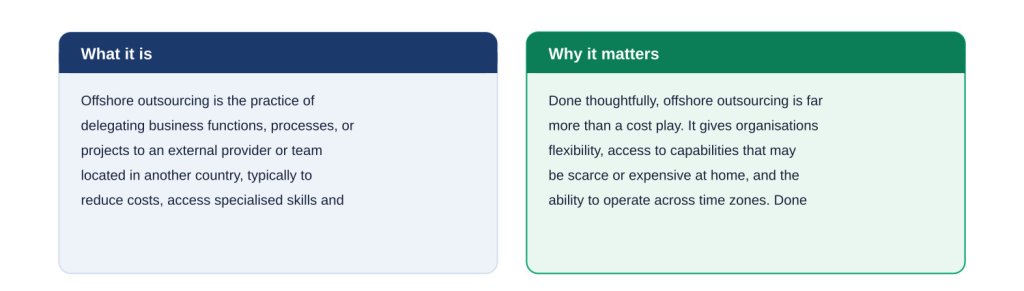
Nearshore Agile Development: what it is, and why it matters for your organisation.
“If you are evaluating Nearshore Agile Development, focus on the core concepts, real-world use cases, and trade-offs first so that any decisions, investments, or implementations are aligned to real outcomes.”
What Is Nearshore Agile Development?
Nearshore agile development combines two ideas. Nearshoring means engaging a development team in a nearby country — close or adjacent in geography, time zone, and often culture — rather than in a distant location. Agile development is an iterative, collaborative approach to building software, emphasising frequent communication, continuous delivery, and the ability to adapt as requirements evolve. Nearshore agile development brings these together in a single model.
The reason for combining them is that agile methods depend heavily on close collaboration. Agile relies on frequent interaction between developers, product owners, and stakeholders — daily stand-ups, regular planning and reviews, and constant communication. This is difficult to sustain across large time-zone gaps, which is where traditional offshore outsourcing often struggles with agile delivery.
Nearshoring solves this by keeping the team close enough to collaborate in real time during shared working hours. The result is a team that works as a genuine extension of the organisation, participating fully in agile ceremonies and day-to-day communication, while still offering the cost and talent benefits of working outside the most expensive local markets. This balance is the essence of nearshore agile development.
How Nearshoring and Agile Complement Each Other
Agile and nearshoring are well matched because they address each other’s needs. Agile development needs close, continuous collaboration to work.Without frequent communication and quick feedback, its iterative cycles break down. Nearshoring provides exactly this proximity, with overlapping hours that allow real-time interaction throughout the working day.
Conversely, nearshoring benefits from agile’s structure and communication practices. Agile’s clear rituals like stand-ups, sprint planning, reviews, and retrospectives keep distributed teams aligned and transparent. These practices help bridge any remaining distance, ensuring everyone shares the same understanding of priorities, progress, and problems, which is especially valuable when teams are in different locations.
Together, the two create a model that is both collaborative and flexible. Teams can adapt to changing requirements, deliver continuously, and maintain close alignment while the organisation accesses skilled talent cost-effectively. This complementary relationship is why nearshore agile development has become a popular approach for organisations that need high levels of collaboration.
The Advantage of Overlapping Time Zones
The most distinctive advantage of nearshore agile development is overlapping working hours. When a development team shares most or all of the working day with the organisation, real-time collaboration becomes natural. Questions can be answered quickly, problems resolved as they arise, and the constant communication that agile depends on flows without the delays that time-zone gaps introduce.
This overlap transforms the experience of working with a distributed team. Instead of waiting hours for responses or coordinating across narrow windows, the team collaborates as if it were local. Daily stand-ups, pairing, and ad-hoc discussions happen in real time, keeping momentum and alignment high. For agile development, where feedback loops are central, this responsiveness is a significant advantage.
Overlapping time zones also reduce the friction and miscommunication that distance can cause. Misunderstandings are better caught and resolved quickly when people can talk in real-time.
This makes working relationships smoother and the development process more efficient, which is a major reason organisations choose nearshore over more distant arrangements for collaborative work.

Cost and Talent Advantages
Like other outsourcing models, nearshore agile development offers cost advantages compared with building a team entirely in the most expensive local markets. Engaging skilled developers in nearby countries with lower cost structures reduces the expense of development while still accessing strong talent. This makes it possible to build and scale software teams more affordably.
Access to talent is just as important as cost. Skilled software developers are in high demand and short supply in many markets, and nearshoring widens the talent pool to nearby regions with strong technical capabilities. This allows organisations to find the skills they need and to scale their teams more readily than they could by relying on a tight local market alone.
Importantly, nearshore agile development tends to balance these benefits with quality and collaboration rather than pursuing the lowest possible cost. Because proximity supports close working relationships and effective agile delivery, organisations can access cost and talent advantages without the communication and quality challenges that can undermine more distant, purely cost-driven arrangements. This balance of value and collaboration is central to the model’s appeal.
Cultural and Communication Alignment
Beyond time zones, nearshoring often brings cultural and communication alignment that supports effective collaboration. Nearby countries frequently share more cultural similarities, business practices, and language proficiency, which reduces the misunderstandings and friction that can arise when working across very different contexts. This alignment makes day-to-day collaboration smoother.
Cultural proximity matters because software development is a deeply collaborative, communication-intensive activity. Shared expectations about how to work, communicate, and solve problems help teams operate cohesively. When the development team understands the organisation’s context and ways of working, it can contribute more effectively and integrate more naturally as an extension of the in-house team.
This alignment complements the structure that agile provides. Clear agile practices combined with cultural and communication compatibility create teams that are genuinely unified despite being in different locations. The reduced friction and stronger mutual understanding are significant advantages of nearshoring, contributing to the close, productive collaboration that makes nearshore agile development effective.
Challenges of Nearshore Agile Development
Nearshore agile development offers many advantages, but it is not without challenges that must be managed. Even with overlapping time zones and cultural proximity, working with a distributed team requires deliberate communication, coordination, and integration. Treating the nearshore team as separate or distant, rather than as part of the organisation, undermines the collaboration the model depends on.
Maintaining alignment and quality requires ongoing attention. Distributed teams need clear shared understanding of priorities, standards, and goals, and this must be actively maintained through good agile practices and communication. Without this, even a capable nearshore team can drift out of alignment, leading to misunderstandings or inconsistent quality.
Selecting the right partner and integrating the team well are critical early challenges. The benefits of nearshore agile development depend on engaging a capable team and bringing it into the organisation’s ways of working through proper onboarding and integration. Investing in these foundations is what turns the potential of the model into reliable delivery, while neglecting them is a common cause of disappointment.
Best Practices for Nearshore Agile Teams
Full integration of nearshore agile teams empowers businesses to form development teams that are highly productive, collaborative, and promote a culture of inclusion and integration. Here are some best practices you can use as references:
- Treat the nearshore team as an extension of the organisation. Bring the team fully into the project’s daily rhythm rather than treating it as a separate external supplier.
- Integrate the team into day-to-day collaboration. The team should feel and operate as one shared delivery group, with clear ownership and active participation.
- Maintain strong agile practices. Regular agile ceremonies help distributed teams stay aligned, transparent, and focused on the same priorities.
- Use shared tools to create visibility. Everyone should be able to see progress, priorities, issues, and decisions in one common workspace.
- Keep communication frequent and open. Nearshore agile works best when questions, risks, and changes are discussed early rather than delayed.
- Invest in onboarding and shared context. A nearshore team performs better when it understands the organisation’s goals, standards, users, and ways of working from the start.
- Build genuine working relationships. Trust and familiarity make collaboration smoother, especially when teams are distributed across locations.
- Choose a capable, well-aligned partner. The right partner should provide technical capability, cultural fit, agile discipline, and a willingness to work as part of one integrated team.
- Manage the relationship as a real partnership. With full integration, strong agile discipline, and shared accountability, nearshore agile development becomes an effective model for building software at scale.
When Nearshore Agile Development Is the Right Choice
Nearshore agile development is particularly well suited to organisations building software in an agile way that needs to scale their teams cost-effectively while maintaining close collaboration. When real-time interaction, responsiveness, and the ability to adapt to changing requirements are important — as they are in most modern software development — the proximity of nearshoring is a significant advantage over more distant models.
It is also a strong choice when access to skilled talent is a constraint. Organisations facing tight local talent markets can use nearshoring to find the skills they need in nearby regions, scaling their teams more readily while keeping the collaboration that agile requires. This makes ambitious development plans feasible without compromising ways of working.
As with any model, the decision should weigh the specific needs of the project and organisation. For collaborative, evolving software work where cost, talent, and close collaboration all matter, nearshore agile development offers an attractive balance. Making the choice well — and selecting and integrating the right team — is what turns it into a lasting source of development capability and value.
Nearshore Agile Compared with Other Models
It helps to see nearshore agile development alongside the alternatives. Building an in-house team in a high-cost market offers maximum control and collaboration but at the highest cost and with the constraint of a single, often tight, talent pool. It is the right choice for the most sensitive, core work, but it limits how quickly and affordably teams can scale.
Traditional offshore development, in distant time zones, offers the greatest cost savings and access to large talent pools, but the time-zone gap and distance make the real-time collaboration that agile depends on difficult. It can work well for more defined, less collaborative work, but it often struggles with the iterative, communication-intensive nature of agile delivery.
Nearshore agile development sits between these; balancing cost and talent benefits with the proximity that supports close collaboration. It does not offer the absolute lowest cost of distant offshoring or the total control of an in-house team, but for collaborative, evolving software work it frequently offers the best overall balance. Choosing between these models is about matching the approach to the nature and priorities of the work.
Measuring Success in Nearshore Agile Development
As with any development approach, it is important to measure whether nearshore agile development is delivering measurable success. Useful measures combine delivery and quality metrics — such as the pace of delivery, the predictability of sprints, defect rates, and the quality of the software produced — with the health of the collaboration, including communication, alignment, and how well the nearshore team is integrated.
Measuring collaboration matters because it is central to the model. Signs that the nearshore team is operating as a genuine extension of the organisation — active participation in agile ceremonies, smooth communication, and shared understanding of priorities — indicate that the approach is working. Difficulties in these areas are early signals that integration or ways of working need attention. Talent outsourcing experts such as USER Experience Researchers (website: user.com.sg) can help you in establishing measurable performance with nearshore agile development teams.
Ultimately, success should be judged by business outcomes: software delivered that meets needs, at a sustainable cost, with the responsiveness to adapt as requirements change. Tracking these outcomes, alongside delivery quality and collaboration health, gives a complete picture and helps the organisation refine the arrangement over time. This disciplined attention to results is what keeps nearshore agile development delivering value.
The Future of Distributed Agile Development
Distributed software development is now the norm rather than the exception, and the tools and practices that support it continue to mature. Collaboration platforms, real-time communication, and shared development environments have made working across locations far smoother than in the past, and they keep improving. This trend strengthens the case for models like nearshore agile development that combine distribution with close collaboration.
As organisations grow more comfortable with distributed work, the emphasis is shifting from whether to work with distributed teams to how to do it most effectively. Nearshore agile development represents a mature answer to this question for collaborative software work, balancing the advantages of accessing wider talent pools with the proximity that makes real-time collaboration practical. Its relevance is likely to grow as distributed development becomes ever more central.
For organisations building software, the practical implication is that investing in the practices, tools, and partnerships that make distributed agile work is an investment in future capability. By establishing strong ways of working with nearshore teams now, organisations position themselves to scale their development effectively and adapt as the landscape continues to evolve. The direction of travel favours those who learn to collaborate well across locations.
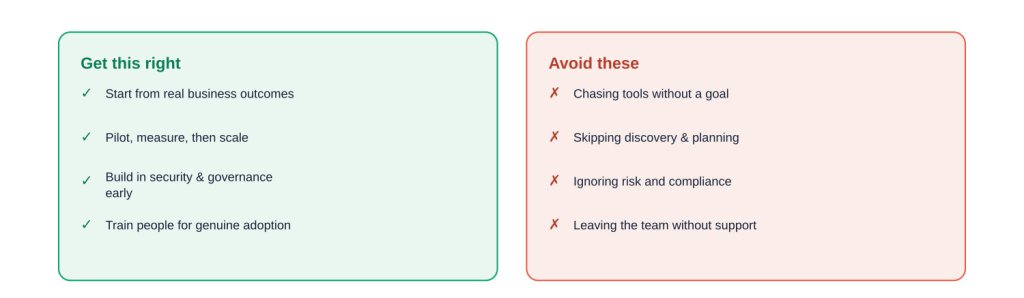
What to get right with Nearshore Agile Development — and the common mistakes to avoid.
Key takeaways
- Nearshore Agile Development is best approached around clear business outcomes, not tools or hype.
- Nearshoring and agile complement each other’s strengths.
- Nearshoring benefits organisations through leveraging team members’ overlapping time zones.
- Nearshore agile development brings about cost, talent, and collaboration advantages.
- When you pilot, measure, and then scale — with security, governance, and adoption built in, nearshoring can greatly improve your business’ performance.
- Reliable partner firms, such as USER (user.com.sg) can help you plan, implement, and optimise Nearshore Agile Development for your context.
Conclusion
Nearshore agile development offers a compelling balance for organisations building software: the cost and talent advantages of outsourcing combined with the close, real-time collaboration that agile methods demand. By engaging skilled teams in nearby countries with overlapping working hours and cultural proximity, organisations can access capable, cost-effective talent while preserving the responsiveness, alignment, and adaptability that modern development requires. This balance distinguishes it from more distant outsourcing models.
Realising these benefits depends on how the model is implemented. The advantages of proximity must be matched by full integration of the team, strong agile practices, good communication, and a genuine partnership built on careful onboarding and the right choice of partner. Approached this way, nearshore agile development becomes an effective and sustainable way to build software at scale — combining value, talent, and collaboration in a model well suited to the demands of modern development.
Work with USER on Nearshore Agile Development
If you are exploring Nearshore Agile Development for your organisation, the most valuable next step is a focused conversation about your goals, current state, and the outcomes that matter most. USER is a Singapore-based workforce solutions company that can recommend the right discovery, planning, or implementation pathway for your context. See more details at user.com.sg or reach out to them by email at project@user.com.sg.
Frequently Asked Questions
Nearshore agile development is building software with an agile team in a nearby country that shares overlapping working hours and cultural proximity. It combines the cost and talent benefits of nearshoring with the close, iterative collaboration that agile methodologies require.
Nearshoring engages teams in nearby countries with overlapping time zones and often greater cultural similarity, while offshoring typically involves more distant locations chosen mainly for cost. Nearshoring’s proximity makes real-time collaboration easier, which is especially important for agile development.
Agile depends on frequent, real-time collaboration — daily stand-ups, planning, reviews, and constant communication — which is hard to sustain across large time-zone gaps. Nearshoring’s overlapping hours allow this close collaboration, making agile delivery far more effective than with distant teams.
The benefits include overlapping working hours for real-time collaboration, cost and talent advantages, cultural and communication alignment, and the flexibility and responsiveness of agile. Together these provide skilled, cost-effective development without sacrificing close collaboration.
Challenges include the need for deliberate communication and integration, maintaining alignment and quality across a distributed team, and selecting and onboarding the right partner. These are managed by treating the team as a genuine extension of the organisation and using strong agile practices.
Overlapping time zones allow real-time communication throughout the working day, so questions are answered quickly, problems are resolved as they arise, and agile ceremonies run smoothly. This responsiveness keeps momentum and alignment high and reduces the miscommunication that distance can cause.
Treat the team as a full extension of the organisation, integrate it into agile ceremonies and communication, maintain strong agile practices and shared tools, invest in onboarding and relationships, and choose a capable, well-aligned partner. Full integration and genuine partnership are key.
It is a strong choice for organisations building software in an agile way that need to scale cost-effectively while maintaining close, real-time collaboration, and for those facing tight local talent markets. It suits collaborative, evolving work where cost, talent, and collaboration all matter.

