

Revolutionising Data Extraction with AI Techniques and Best Practices
Artificial Intelligence is transforming how organisations extract, process, and analyse data. With the post-digital age characterised by overwhelming amounts of information, AI data extraction offers a leap forward, delivering speed, accuracy, and scalability that traditional methods simply cannot match. As data plays bigger parts in organisations today, they require efficient systems to manage massive volumes of data. Traditional, manual data extraction is often slow, error-prone, and incapable of handling the complexity of modern data sources. Thankfully, AI data extraction leverages intelligent algorithms to automate and streamline this process, ensuring that data is collected quickly but is also accurate and actionable.
In this article we dive into the techniques, technologies, applications, challenges, and future trends of AI-driven data extraction, providing actionable insights for professionals across industries.
What is AI Data Extraction?
AI data extraction is the automated process of collecting, processing, and analysing data using artificial intelligence technologies. By replacing manual extraction techniques with machine-driven processes, these systems can quickly parse unstructured data, detect patterns, and provide more reliable results.
For example, an AI tool can scan through hundreds of invoices to extract critical financial figures with far greater precision than manual entry. This saves the organisation both time and resources as they maintain consistency and accuracy in their records.
Why AI Data Extraction Matters Today
Automation with properly set rules minimises human error, reduces processing time, and provides real-time insights vital for strategic decision-making. As companies increasingly rely on data to guide operations, this automated process has become a key enabler in driving efficiency and supporting robust, data-informed strategies.
Core Technologies Behind AI Data Extraction
The success of AI data extraction lies in the seamless integration of several cutting-edge technologies. Understanding these technologies illuminates how AI systems can revolutionise data processing and offer unprecedented efficiency.
Natural Language Processing and Machine Learning
Natural Language Processing (NLP) and machine learning algorithms are the backbone of text-based data extraction. NLP allows systems to comprehend and process human language, extracting meaning from unstructured text in emails, documents, and social media. Machine learning models are trained on vast datasets to recognise patterns, improving their accuracy.
For instance, some models are specifically trained to identify financial terms in a complex report, automatically categorising and extracting key information.
Computer Vision and Image Recognition
Computer vision technology empowers AI systems to interpret and extract data from visual inputs. Materials such as scanned documents, images, and handwritten notes are examples of input for computer vision. Image recognition algorithms analyse visual content to detect text, symbols, and other pertinent data points.
The capability to “read” is particularly valuable in industries where critical information is embedded in images, such as extracting data from receipts or medical forms. In some cases, traditional optical character recognition might fail, and computer vision may be more accurate especially with bulk information.
Applications of AI Data Extraction
The impact of AI-powered data handling extends across many sectors, enabling businesses to optimise operations, reduce costs, and make informed decisions.
Business and Financial
Automating repetitive tasks like invoice processing, risk management, and financial forecasting are highly beneficial in the business and finance sectors. AI systems help identify anomalies, predict trends, and optimise budgeting processes by rapidly analysing vast amounts of economic data. The automation reduces operational costs and minimises human error, ensuring a higher degree of accuracy in financial reporting.
Healthcare and Legal Applications
The healthcare industry benefits significantly from AI data extraction through improved patient record management and streamlined administrative workflows. AI can extract critical health data from patient files, ensuring timely and accurate information is available for diagnosis and treatment. Similarly, in the legal field, AI-driven systems assist in contract analysis, regulatory compliance, and case documentation review—accelerating processes that traditionally required extensive manual effort.
Challenges and Best Practices
Despite its transformative potential, AI data extraction comes with challenges. Understanding these obstacles and implementing best practices is essential for organisations to leverage AI technology fully.
Common Challenges in AI Data Extraction
Several challenges may arise when implementing AI data extraction:
- Inconsistent Data Formats: Data often originates from diverse sources with varying structures, complicating the extraction process.
- Error Propagation: Minor inaccuracies in the extraction process can escalate, affecting overall data integrity.
- Continuous Model Updates: AI models require regular retraining to adapt to new data types and maintain performance levels.
- Integration Complexities: Incorporating AI solutions into legacy systems can be a significant hurdle.
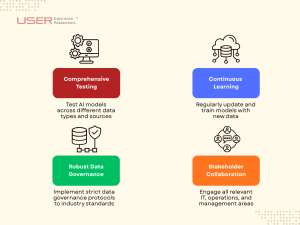
Strategies and Best Practices for Implementation
To overcome these challenges and maximise the benefits of AI data extraction, consider the following strategies:
- Comprehensive Testing: Rigorously test AI models across different data types and sources to ensure robust performance.
- Continuous Learning: Regularly update and train models with new data to maintain accuracy and adapt to evolving needs.
- Stakeholder Collaboration: Engage all relevant IT, operations, and management departments to facilitate smooth integration and adoption.
- Robust Data Governance: Implement strict data governance protocols to ensure data integrity, security, and compliance with industry standards.
Future Trends in AI Data Extraction
AI data extraction is evolving rapidly, with several emerging trends poised to reshape the industry further.
Emerging Technologies and Innovations
Advances in deep learning, neural networks, and augmented intelligence are setting the stage for the next generation of data extraction technologies. These innovations promise:
- Enhanced Accuracy: With continuous learning and more sophisticated algorithms, AI systems will achieve even greater precision in data extraction.
- Real-Time Processing: Emerging technologies enable instantaneous data analysis, empowering businesses to make faster, informed decisions.
- Integration of Unstructured Data: Improved algorithms make extracting actionable insights from previously challenging data sources, such as social media or multimedia content, more effortless.
Predictions and Impact on Industries
Looking ahead, AI data extraction is expected to have profound implications across various industries:
- Business Transformation: Enhanced data extraction capabilities will drive cost efficiencies and provide a competitive edge.
- Scalability Improvements: Businesses can scale their operations without compromising data quality as AI systems become more adept at handling large datasets.
- Industry-Specific Innovations: Sectors such as finance, healthcare, and legal will benefit from tailor-made AI solutions that address their unique challenges, leading to more effective and streamlined processes.
Conclusion and Key Takeaways
AI extraction significantly advances how data is processed, analysed, and utilised. Organisations can achieve unprecedented efficiency and accuracy by harnessing the power of machine learning, NLP, and computer vision. While challenges such as data inconsistency and integration complexities persist, the strategic implementation of best practices can mitigate these issues and unlock the full potential of AI-driven data extraction.
About User Experience Researchers
User Experience Researchers Pte Ltd (USER) is a leading UX-focused company specialising in digital transformation consultancy, agile development, and workforce solutions. We have a steadfast commitment to innovating the best of today’s technology to promote sustainable growth for businesses and industries.
For more information, contact USER through project@user.com.sg
FAQ
What is AI data extraction, and how does it differ from traditional methods?
AI data extraction uses intelligent algorithms to automate data collection and analysis, offering faster, more accurate results than manual processes.
How does machine learning enhance the accuracy of data extraction?
Machine learning models learn from data over time, identifying patterns and improving their ability to extract relevant information with increasing accuracy.
Which industries benefit the most from AI data extraction?
AI-driven solutions streamline processes and enhance data accuracy in industries such as finance, healthcare, legal, and business operations.
What are the main challenges in implementing AI data extraction solutions?
Challenges include handling diverse data formats, preventing error propagation, integrating with legacy systems, and maintaining continuous updates of AI models.
How can businesses ensure data quality when using AI extraction methods?
Implementing robust data governance, comprehensive testing, and regular model updates are critical to ensuring high-quality data extraction.
What future trends are anticipated in the realm of AI data extraction?
Future trends include advancements in deep learning, real-time data processing, and enhanced scalability, further improving extraction accuracy and efficiency.
What best practices should be followed for successful AI data extraction projects?
Best practices involve comprehensive testing, continuous model training, stakeholder collaboration, and strong data governance measures to ensure sustained success.

