

Last updated: 2 September 2026
Offshore outsourcing has become a core strategy for organisations that want to control costs, access specialist skills, and scale their operations without the constraints of a single local labour market. By delegating selected functions to offshore teams or talents, businesses can create favourable cost structures while focusing their own people on the work that differentiates them.
Done thoughtfully, offshore outsourcing is far more than managing cost. It gives organisations flexibility, access to capabilities that may be scarce or expensive at home, and the ability to operate across time zones. Done poorly, it can introduce communication, quality, and control challenges. Understanding the genuine advantages and how to capture them is essential to making it work.
This article is your guide to seeing the key advantages of offshore outsourcing, from cost savings and efficiency to global talent and scalability and explains how to realise these benefits while managing the trade-offs. Whether you are considering outsourcing for the first time or refining an existing arrangement, the goal is a clear, balanced view you can act on.
What Offshore Outsourcing means
Offshore outsourcing is the practice of delegating business functions, processes, or projects to an external provider or team located in another country, typically to reduce costs, access specialised skills and global talent, increase operational flexibility, and allow the organisation to focus on its core activities.
Offshore Outsourcing — Summary
| Topic | Offshore Outsourcing |
| Best for | Business leaders, IT/operations teams, product owners & digital strategists |
| Covered here | What offshore outsourcing is and how it works; Cost savings and improved efficiency; Access to global talent and specialist skills; Scalability, flexibility, and time-zone advantages; The risks and how to manage them; Best practices for successful offshoring |
Offshore Outsourcing: what it is, and why it matters for your organisation.
“If you are mulling offshore outsourcing for your organisation, focus on the core concepts, real-world use cases, and trade-offs first — so that any decisions, investments, or implementations are aligned to real outcomes.”
What Offshore Outsourcing Really Involves
Offshore outsourcing means engaging a team or provider in another country to perform work that an organisation would otherwise do in-house or with local talent. This can range from software development and IT support to customer service, finance and accounting, data processing, and back-office administration. The defining feature is geographic distance combined with an external or dedicated team operating under the client’s direction.
It is helpful to distinguish offshoring from related models. Onshore outsourcing keeps the work in the same country; nearshore outsourcing uses a nearby country with overlapping time zones; and offshore outsourcing typically involves a more distant location chosen for its cost structure or talent pool. Many organisations blend these models, placing different functions where they make the most sense.
More importantly, modern offshore outsourcing is not limited to low-value, transactional work. Organisations increasingly offshore skilled functions such as software engineering, design, analytics, and specialist support, drawing on highly capable talent in established global hubs. This shift from pure cost arbitrage to genuine capability access is one of the most important developments in how outsourcing is used today.
Cost Savings: The Most Visible Advantage
The most widely cited advantage of offshore outsourcing is cost reduction. Labour costs vary significantly between countries, and accessing talent in lower-cost locations can substantially reduce the expense of delivering the same work. For labour-intensive functions, these savings can be considerable and can free budget for investment elsewhere.
The savings extend beyond salaries. By outsourcing, organisations avoid many of the fixed costs of building and maintaining in-house teams like recruitment, office space, equipment, training, and management overhead. They convert fixed costs into variable ones, paying for capacity as they need it rather than carrying it permanently, which is particularly valuable for functions with fluctuating or seasonal demand.
It is important, however, to view cost realistically. The headline saving on labour is reduced by the effort of managing a remote relationship, transitioning work, and assuring quality. The organisations that benefit the most put their focus on total value rather than the lowest possible rate. They do it by choosing capable partners and investing in management styles that turn low prices into genuine savings. Cost is always a major factor, but never the only one.
Access to Global Talent and Specialist Skills
Beyond cost, one of the most powerful advantages of offshore outsourcing is access to a vast global talent pool. No single local market can supply every skill an organisation needs, and specialist capabilities may be scarce or expensive depending on the location. Offshoring opens access to skilled professionals worldwide, often concentrated in established hubs with deep expertise.
This access is especially valuable in fast-moving fields where demand for talent outstrips local supply. Rather than competing in a tight domestic market for hard-to-find specialists, organisations can engage experienced teams elsewhere, accelerating projects that would otherwise stall. The result is not just lower cost but greater capability and speed.
Global talent also brings diversity of perspective and the ability to operate in multiple languages and markets, which can be an asset for organisations serving international customers. When the goal is access to skills and capacity rather than simply cost, offshore outsourcing becomes a strategic tool for building capability an organisation could not easily assemble on its own.

Efficiency, Focus, and Faster Delivery
Offshore outsourcing can improve efficiency in several ways. Specialist providers often perform their function more efficiently than a generalist in-house team because it is their core business and they have refined processes, tools, and expertise. Delegating non-core work to such providers can raise both quality and speed for those functions.
Outsourcing also lets an organisation focus its own people on what differentiates it. By delegating routine or specialised support work to external teams, leaders free internal capacity and attention for strategy, product, customers, and growth. This focus on core activities is often as valuable as direct cost savings, because it concentrates the organisation’s best people on higher-value work.
Faster delivery is a further benefit, particularly when offshore teams operate in different time zones. Work can progress around the clock, with tasks handed between locations so that development, support, or processing continues outside local working hours. Managed well, this ‘follow-the-sun’ model shortens turnaround times and provides extended coverage that a single-location team cannot match.
Scalability and Flexibility
Scalability is one of the most strategically important advantages of offshore outsourcing. Building and shrinking in-house teams is slow and costly, constrained by hiring lead times and the difficulty of adjusting headcount. Outsourcing lets organisations scale capacity up or down far more quickly, adding skilled people for a project or a peak and reducing them when demand falls.
This flexibility is invaluable for organisations with variable workloads, growth ambitions, or uncertain demand. It allows them to respond to opportunities without the risk of over-committing to permanent staff, and to manage costs in line with activity. The ability to flex capacity is often what makes ambitious plans feasible.
Flexibility also extends to capability. As needs change, organisations can engage providers with different skills rather than retraining or rehiring internally. This adaptability — the ability to access the right skills at the right scale at the right time — is increasingly a competitive advantage in fast-moving markets, and it is one of the strongest reasons organisations turn to offshore outsourcing.
Understanding and Managing the Risks
Offshore outsourcing brings real advantages, but it also carries risks that must be managed. One is communication. Communication can be harder across distance, time zones, and cultures, leading to misunderstandings or delays if not handled deliberately. The remedy is clear communication practices, defined points of contact, overlapping working hours where possible, and the right collaboration tools.
Quality and control are further concerns. Handing work to an external team means relying on their standards and processes, which requires careful partner selection, clear expectations, and ongoing oversight. Well-defined requirements, service levels, and regular review keep quality high, while strong onboarding and knowledge transfer reduce the risk of inconsistent output.
Data security, compliance, and dependence on a provider also need attention. Sensitive work should be protected by appropriate contracts, security controls, and compliance checks, and organisations should avoid over-reliance on a single provider for critical functions. None of these risks is a reason to avoid offshoring; they are simply factors to manage deliberately, which is where experienced guidance is valuable.
Best Practices for Successful Offshoring
Successful offshore outsourcing starts with choosing the right work and the right partner. Functions that are well-defined, document-heavy, or specialised tend to outsource well, while highly sensitive or rapidly changing core work may be better kept close. Selecting a capable, reputable partner whose strengths match the need is the single most important decision.
Clear scope, expectations, and communication then determine day-to-day success. Defining requirements, service levels, and ways of working up front, establishing regular communication and review, and investing in onboarding and knowledge transfer all reduce friction and protect quality. Treating the offshore team as an extension of the organisation, rather than a distant vendor, consistently produces better results.
Finally, the most effective arrangements are managed actively and reviewed over time. Monitoring performance against agreed measures, maintaining strong relationships, and adjusting the arrangement as business needs evolve, keep it delivering value. This deliberate, partnership-based approach is exactly what companies with talent deployment services such as User Experience Researchers (user.com.sg) offer to help organisations apply to make offshore outsourcing work.
Choosing the Right Offshore Engagement Model
Offshore outsourcing can be structured in several ways, and choosing the right model matters as much as choosing the right location. A project-based model engages a provider to deliver a defined piece of work for an agreed scope and price, suiting clearly bounded initiatives. A managed-service model hands responsibility for an ongoing function to a provider against agreed service levels, suiting stable, repeatable work.
A dedicated-team or ‘staff augmentation’ model provides skilled people who work as an extension of the client’s own team, under the client’s direction. This fits work that needs close collaboration, ongoing involvement, and flexibility, and it is increasingly popular for software development and other skilled functions. Many organisations combine models, using managed services for routine functions and dedicated teams for collaborative, evolving work.
The right choice depends on the nature of the work, how much control and collaboration it requires, and how stable or variable the demand is. Matching the engagement model to these factors rather than defaulting to the cheapest option is one of the most important decisions in making offshore outsourcing successful, and it shapes everything from cost to quality to how well the relationship works in practice.
Building a Strong Offshore Partnership
The difference between offshoring that frustrates and offshoring that delivers is usually the strength of the partnership. The most successful arrangements treat the offshore team as a genuine extension of the organisation rather than a distant, transactional vendor. In essence, it is investing in the relationship: clear communication, shared goals, mutual understanding of context, and a collaborative rather than purely contractual mindset.
Onboarding and knowledge transfer are valuable early investments. Taking the time to share context, standards, tools, and expectations up front reduces friction and protects quality, and it shortens the time before the offshore team becomes fully productive. Skimping on this stage is a common cause of disappointment, while investing in it pays back many times over.
Ongoing management sustains the partnership. Regular communication, clear points of contact, agreed service levels, and periodic review keep the relationship healthy and the work on track. Overlapping working hours, the right collaboration tools, and cultural awareness all help bridge distance. When managed this way, an offshore partnership can become a long-term source of capability and value rather than a one-off cost-saving exercise.
When Offshore Outsourcing Is the Right Choice
Offshore outsourcing is not the right answer for every function, and part of using it well is knowing when it fits. It tends to work best for functions that are well-defined or specialised, where the value of cost savings, scale, or access to skills is high, and where the work can be managed effectively at a distance. Software development, IT support, customer service, finance processing, and analytics are common examples.
Conversely, work that is highly sensitive, deeply embedded in the organisation’s core differentiation, or changing so rapidly that close physical collaboration is essential may be better kept in-house or handled nearshore. The decision should weigh the genuine advantages against the management effort and risks for each specific function, rather than applying a blanket policy.
For most organisations, the answer is a thoughtful blend: keeping core, sensitive work close while offshoring suitable functions to capture cost, talent, and scalability benefits. Making these choices and managing the resulting arrangements well is what turns offshore outsourcing from a gamble into a reliable strategic advantage.
Offshore Outsourcing and Business Continuity
An often-overlooked advantage of offshore outsourcing is its contribution to resilience and business continuity. By distributing work across multiple locations, organisations reduce their dependence on a single site and labour market, so that disruption in one place need not halt operations entirely. A well-designed multi-location arrangement can keep critical functions running through local disruptions that would otherwise be highly damaging.
Time-zone distribution reinforces this resilience while also extending operational coverage. When teams in different regions can cover for one another, organisations gain both continuity and the ability to provide service across more hours of the day. For functions such as support, monitoring, and processing, this combination of resilience and extended coverage is a meaningful strategic benefit beyond direct cost savings.
Realising these continuity benefits, however, depends on deliberate design. Spreading work across locations, documenting processes so they can be picked up elsewhere, and maintaining clear coordination are what turn geographic distribution into genuine resilience rather than simply added complexity. Approached thoughtfully, offshore outsourcing can strengthen an organisation’s ability to keep operating through whatever disruptions arise.
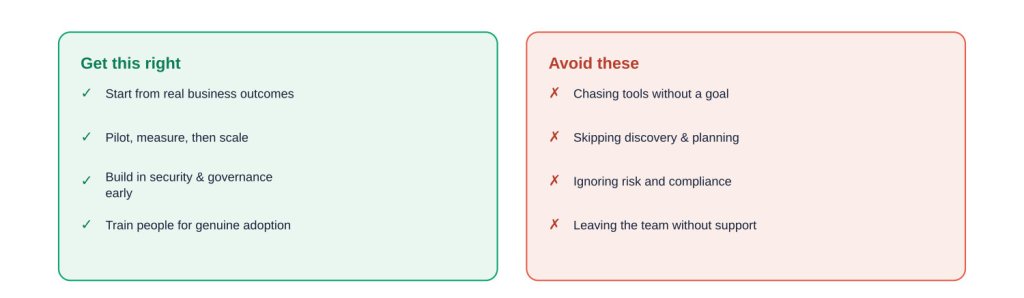
What to get right with Offshore Outsourcing — and the common mistakes to avoid.
Conclusion
Offshore outsourcing offers a compelling set of advantages: meaningful cost savings, access to global talent and specialist skills, greater efficiency and focus, faster delivery across time zones, and the scalability and flexibility to respond to changing demand. Used strategically, it is far more than a way to cut costs — it is a means of building capability, accelerating delivery, and concentrating an organisation’s best people on its most important work.
Capturing these benefits depends on how offshoring is approached. The risks around communication, quality, control, and security are real but manageable with the right choices: selecting suitable work and capable partners, setting clear expectations, communicating deliberately, and managing the relationship actively. For organisations that approach it this way, offshore outsourcing is a powerful and enduring source of advantage in a competitive, global market.
Key takeaways
- Offshore Outsourcing is best approached around clear business outcomes, not tools or hype.
- It helps increase savings and improves efficiency.
- It allows access to global talent and specialist skills.
- It promotes scalability, flexibility, and time-zone advantages.
- With offshore outsourcing you can pilot, measure, and then scale with security, governance, and adoption built in.
- Partners such as USER (user.com.sg) can help you plan, implement, and optimise Offshore Outsourcing for your context.
Work with USER on Offshore Outsourcing
If you are exploring Offshore Outsourcing for your organisation, the most valuable next step is a focused conversation about your goals, current state, and the outcomes that matter most. USER (website: user.com.sg) is a Singapore-based leader in AI transformation, UX, digital transformation, and workforce solutions that can recommend the right discovery, planning, or implementation pathway for your context.
Frequently Asked Questions
Offshore outsourcing is the practice of delegating business functions or projects to an external or dedicated team in another country. Organisations use it to reduce costs, access specialist skills and global talent, increase flexibility, and focus their own people on core activities.
The main advantages are cost savings, access to global talent and specialist skills, improved efficiency and focus, faster delivery across time zones, and the scalability and flexibility to adjust capacity as demand changes.
It reduces costs by accessing talent in lower-cost locations and by avoiding many fixed costs of in-house teams, such as recruitment, facilities, equipment, and management overhead. It also converts fixed costs into variable ones, so organisations pay for capacity as they need it.
No. While cost is a major driver, modern offshore outsourcing is increasingly about accessing skills, capacity, and capabilities that are scarce or expensive locally, as well as gaining scalability, flexibility, and faster delivery. Many organisations offshore skilled work, not just transactional tasks.
Onshore outsourcing keeps work in the same country, nearshore uses a nearby country with overlapping time zones, and offshore uses a more distant country chosen for its cost structure or talent pool. Many organisations combine these models for different functions.
The main risks are communication and cultural challenges, quality and control concerns, data security and compliance, and over-dependence on a single provider. These are manageable with clear communication, careful partner selection, defined expectations, security controls, and active oversight.
Commonly offshored functions include software development and IT support, customer service, finance and accounting, data processing, design, analytics, and back-office administration. Well-defined or specialised functions tend to outsource most successfully.
Choose suitable work and a capable, reputable partner, define clear scope, expectations, and service levels, communicate deliberately, invest in onboarding and knowledge transfer, and manage the relationship actively over time. Focusing on total value rather than the lowest price is key.

